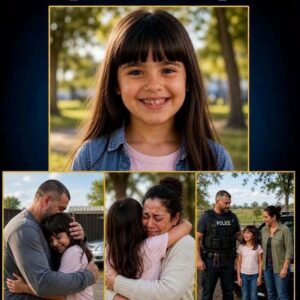
Neighbors froze on their porches as the sound grew louder, their hearts pounding while fragments of frightening rumors moved from one house to another. Something had happened inside the small home. A five-year-old boy was in danger. Police vehicles arrived one after another, medics rushed toward the house, and the peaceful rhythm of the neighborhood disappeared beneath flashing lights and urgent voices.
Someone whispered, “too late.”
But inside that small house, one grandmother refused to surrender.
Her hands were shaking. Her voice cracked. Fear threatened to overwhelm every thought in her mind. Yet somehow, in the middle of the chaos, she forced herself to remember what she had learned months earlier—a CPR class at the community center that she had almost skipped.
The boy had collapsed without warning.
One moment, he was there, part of an ordinary day. The next, his small body was frighteningly still on the living room floor. For a few seconds, the grandmother’s mind went completely blank. Terror washed over her so intensely that it seemed capable of freezing her in place.
Then memory returned.
She remembered the instructor explaining what to do when every second matters. She remembered the rhythm, the instructions, and the importance of continuing even when fear tells you to stop.
One after another.
She counted out loud, clinging to the rhythm as if the numbers themselves could keep him connected to life. Her voice trembled, tears falling down her face, but she refused to stop. She begged him silently to breathe. She called his name. She continued because there was nothing else she could do—and because doing something was better than surrendering to panic.
Then the paramedics finally burst through the door.
They took over immediately, bringing equipment, experience, and urgency into the room. The grandmother stepped back, exhausted and trembling, her arms aching from the effort. Tears streaked her face as she watched the medical team work.
But something had changed.
A faint, stubborn pulse had returned.
It was small. It was fragile. It was nowhere near the certainty anyone wanted. But it was there.
The child was alive.
Later, doctors would emphasize the importance of those first desperate minutes. The time before professional help arrives can matter enormously in an emergency, and the grandmother’s decision to act rather than freeze had given the boy a chance to survive.
For the neighbors who had gathered outside, the scene looked completely different from what they had feared only minutes earlier.
They had heard the sirens.
They had seen the police arrive.
They had watched medics rush through the front door.
Some had already prepared themselves for devastating news.News
Instead,
they watched the boy being carried out alive.
The grandmother stood nearby, still shaking, exhausted by fear and adrenaline. She had no dramatic speech. No heroic pose. There was only relief, disbelief, and the realization that the ordinary decision to attend a CPR class months earlier had suddenly become one of the most important things she had ever done.
She had almost skipped that class.
She probably never imagined she would one day need what she learned there in her own living room.
But when the moment came, the knowledge was there.
And so was she.
Her story is a reminder that emergencies rarely announce themselves. They can arrive in the middle of an ordinary afternoon, in an ordinary house, on an ordinary street. The people who face them are often not doctors or emergency professionals. They are parents, grandparents, neighbors, teachers, friends—ordinary people who suddenly have to act before help can arrive.
Preparation cannot guarantee an outcome.
But preparation can give someone something incredibly valuable when panic takes over: a next step.
For one grandmother, that next step was remembering what she had been taught and refusing to stop.
On that quiet neighborhood street, one woman’s preparation, courage, and refusal to freeze transformed a terrifying moment into something else entirely.
Not certainty.
Not a miracle anyone could promise.
But a chance.
A fragile, hard-won second chance for a five-year-old boy whose life, for a few terrifying minutes, seemed to be slipping away.